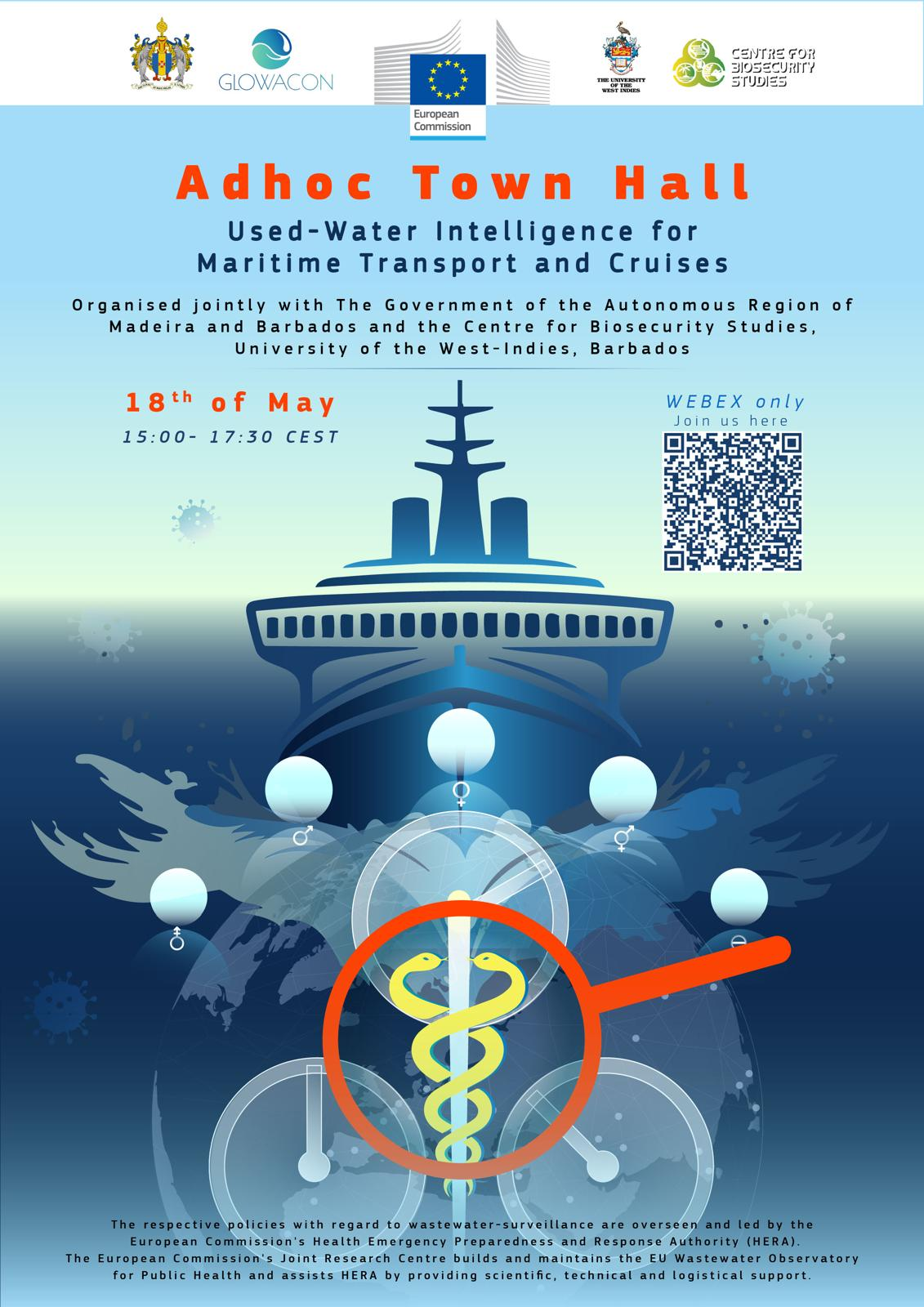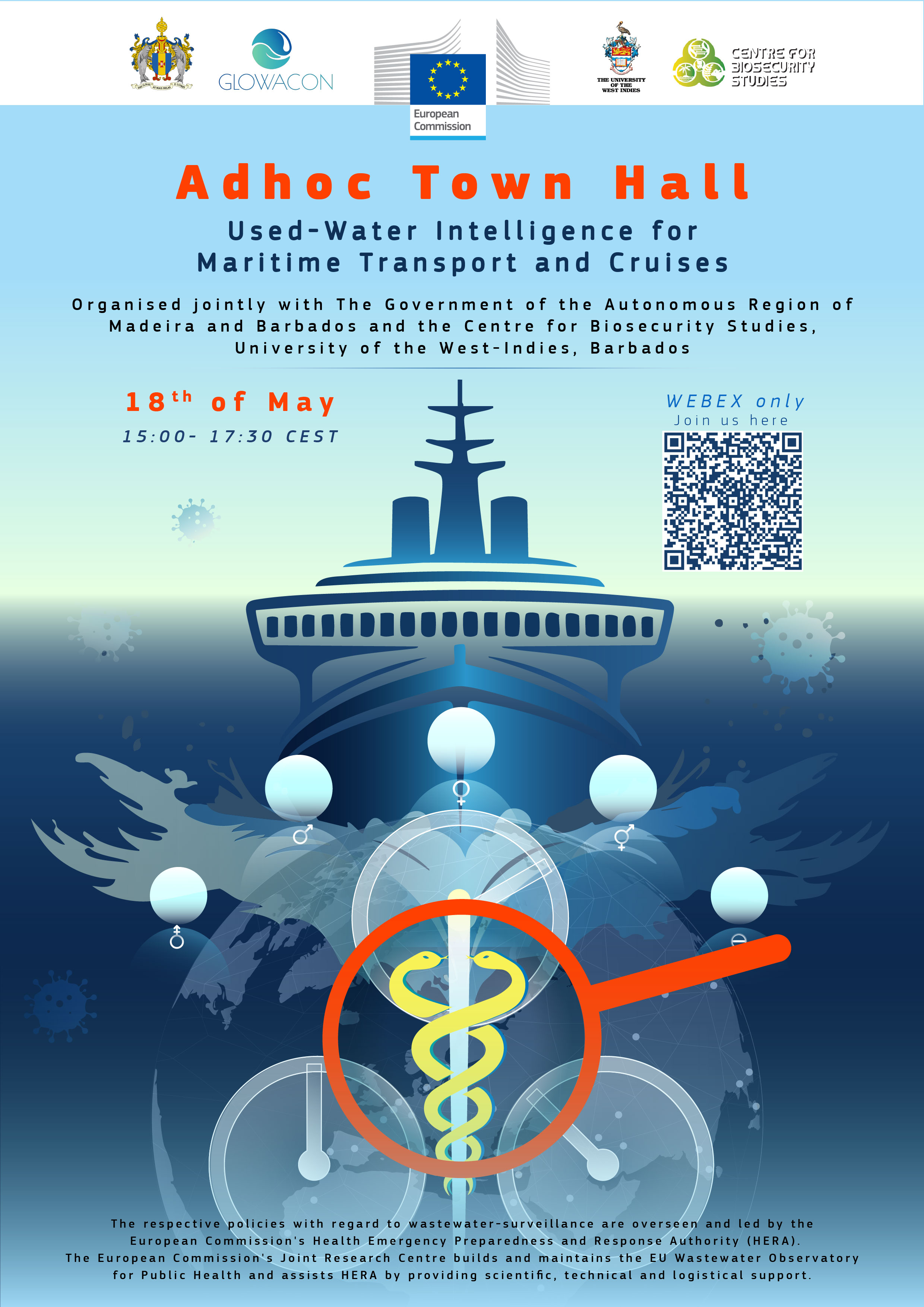
🚢 Ad Hoc Town Hall: Used-Water Intelligence for Maritime Transport & Cruises
📅 Date & Time: May 18, 15:00–17:30 CEST
📍 Online
🌍 Organised by: The European Commission (in support of GLOWACON), co-chaired with the Government of the Autonomous Region of Madeira and the Centre for Biosecurity Studies, University of the West Indies, Barbados
Purpose of the event
Maritime transport and cruise ships are critical hubs for global mobility—but they also pose unique risks for pathogen transmission. From Norovirus (the leading cause of gastrointestinal outbreaks) to SARS-CoV-2 and the emerging Hantavirus (Andes virus), wastewater and blackwater from vessels can serve as a powerful early-warning system to detect, track, and mitigate outbreaks.
This Town Hall explored how used-water intelligence—sampling and analysing wastewater from ships at strategic locations—can enhance real-time surveillance, improve public health responses, and strengthen biosecurity measures in maritime settings.
Key Discussion Points:
🔹 Pathogen Trends (2020–2026):
• Norovirus – Persistent leader in gastrointestinal outbreaks, with 2024 marking a decade-high surge.
• SARS-CoV-2 (COVID-19) – Less dominant post-2022 but still a concern in enclosed environments.
• Hantavirus (Andes virus) – Emerging threat (April/May 2026), causing severe respiratory distress.
• Legionella & vaccine-preventable diseases (e.g., varicella) – Ongoing risks in high-density settings.
🔹 Why Wastewater?
• Ships’ blackwater and greywater can reveal pathogen presence before clinical cases emerge.
• Strategic sampling at ports, onboard systems, and treatment facilities enables proactive monitoring.
🔹 Challenges & Solutions:
• High-density environments accelerate transmission—how can wastewater-based epidemiology (WBE) help?
• Regulatory frameworks – Aligning with Vessel Sanitation Programs and global health standards.
• Technological innovations – Rapid detection, AI-driven analytics, and real-time reporting systems.
🔹 Collaborative Action:
• How can governments, researchers, and the maritime industry work together to prevent the next outbreak?
Target Participants:
- Public health officials & epidemiologists
- Maritime & cruise industry leaders
- Environmental & wastewater experts
- Policy makers & regulatory bodies
- Researchers in biosecurity & infectious diseases
🔗 Register & Join the Conversation
This is your chance to shape the future of maritime health security. Let’s turn wastewater into intelligence—before the next outbreak hits.
#PublicHealth #MaritimeSafety #WastewaterSurveillance #GlobalHealth #CruiseIndustry #Biosecurity #GLOWACON #EUHealth #OneHealth
Follow the discussion with #UsedWaterIntelligence and stay tuned for key takeaways! 🌍💧
Documents:
Short Records of the Town Hall